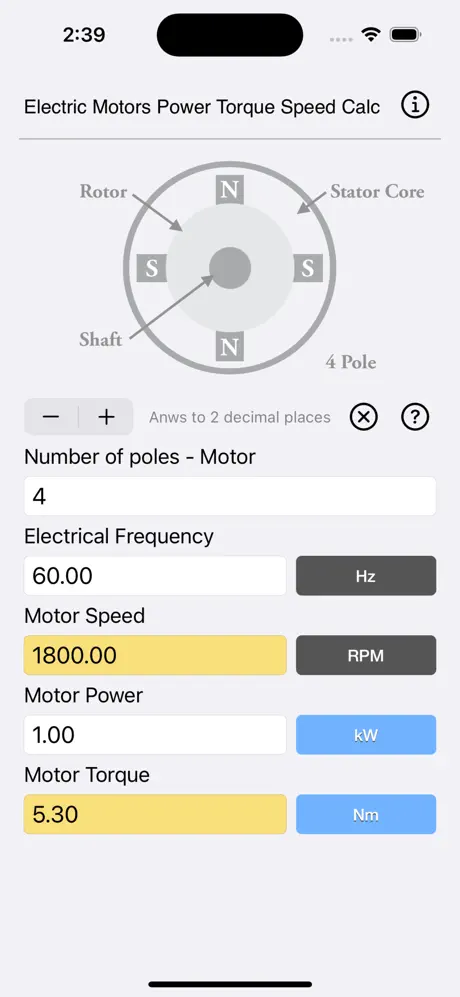
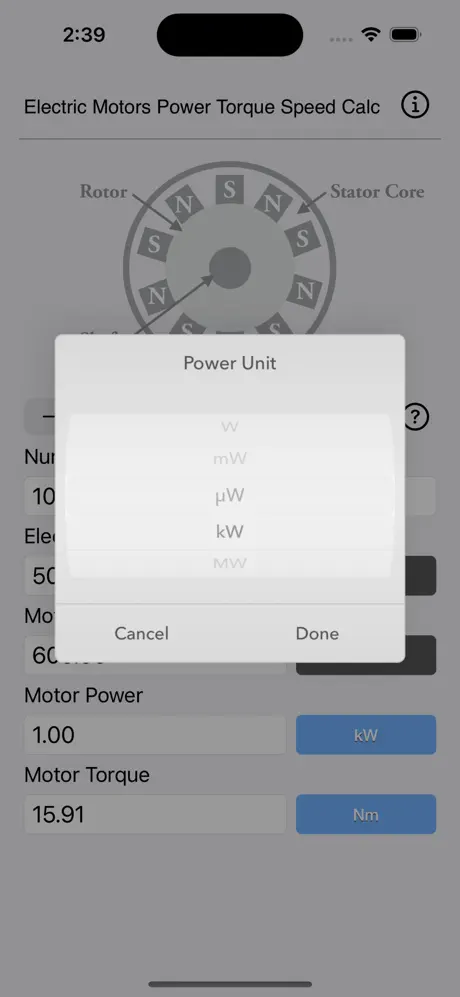
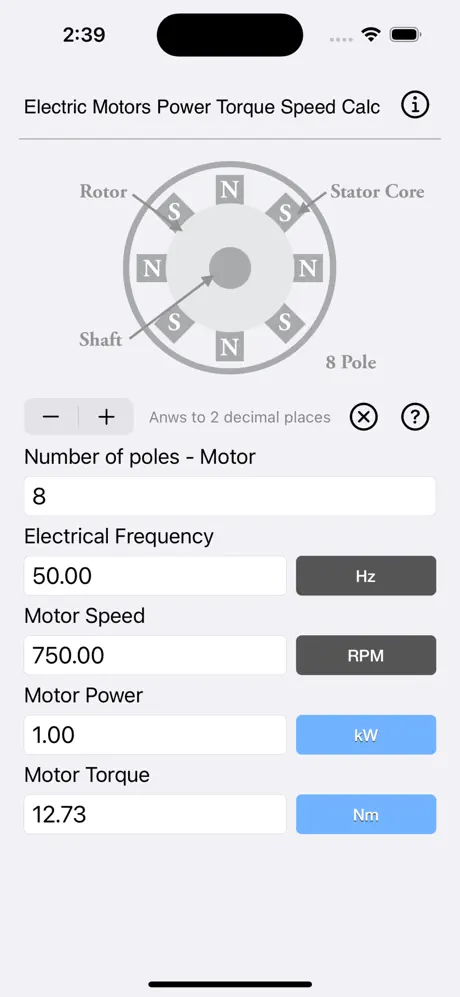
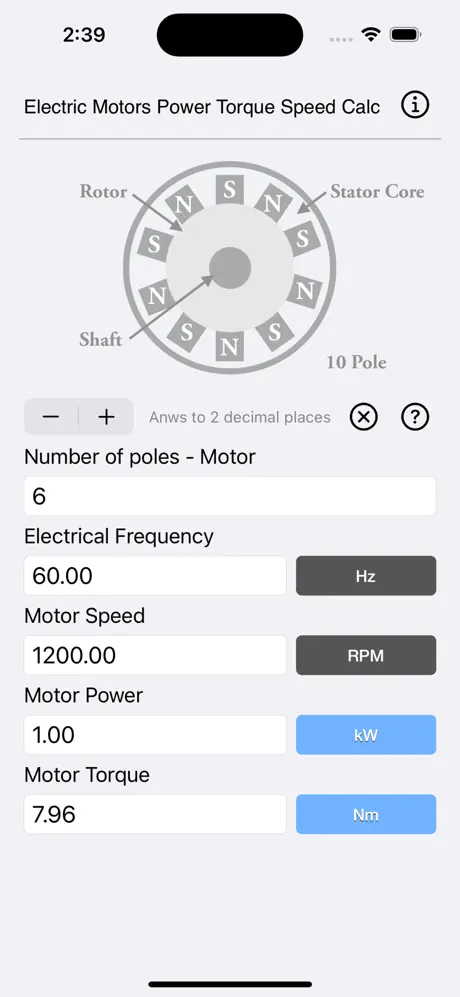
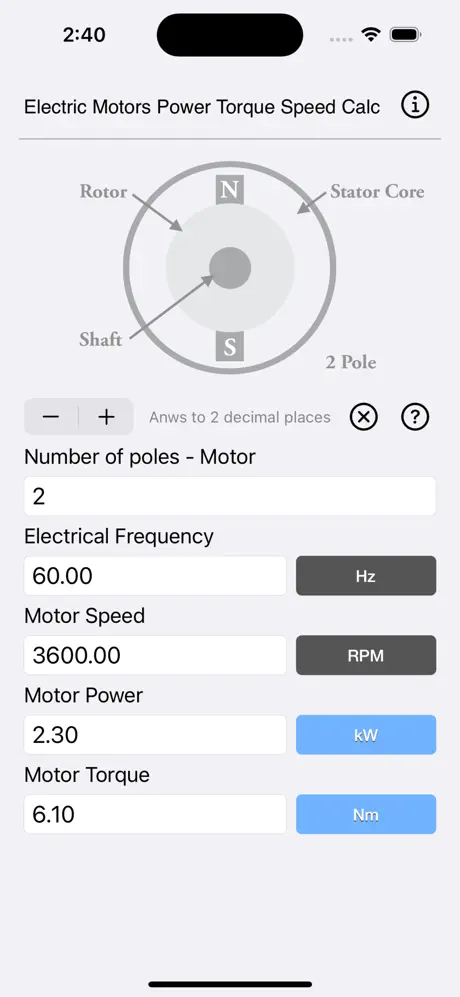
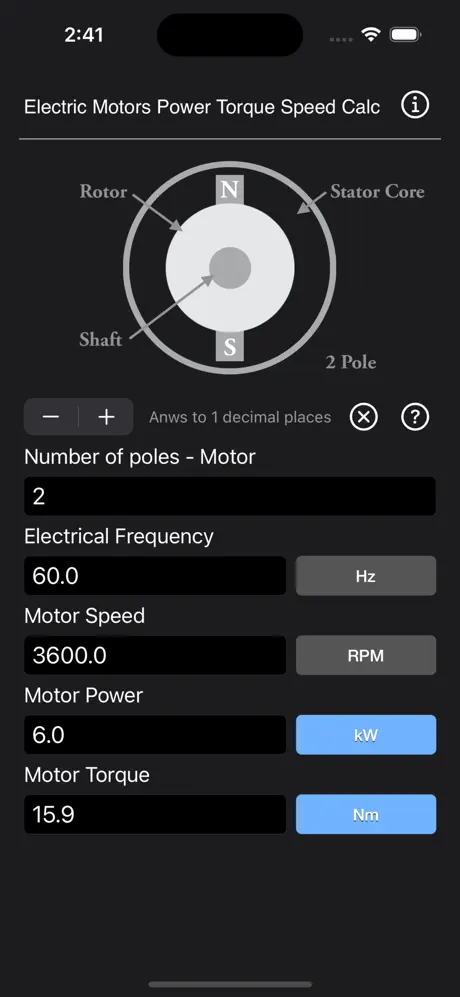
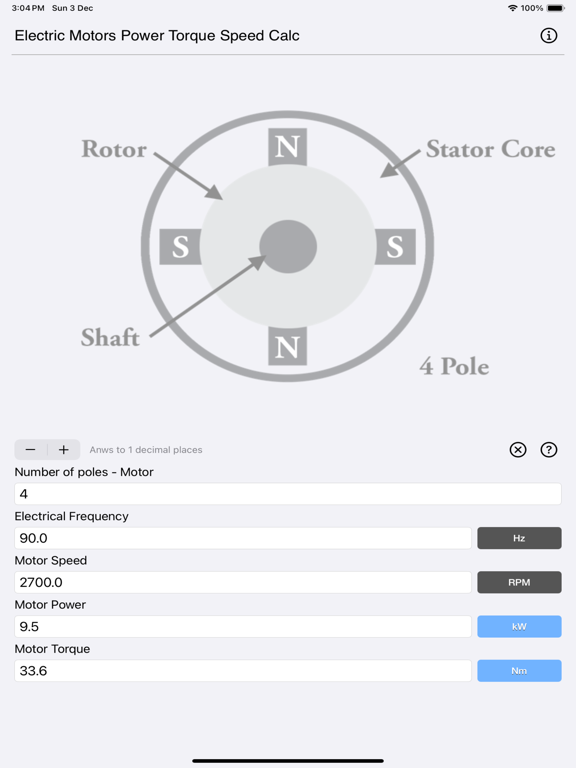
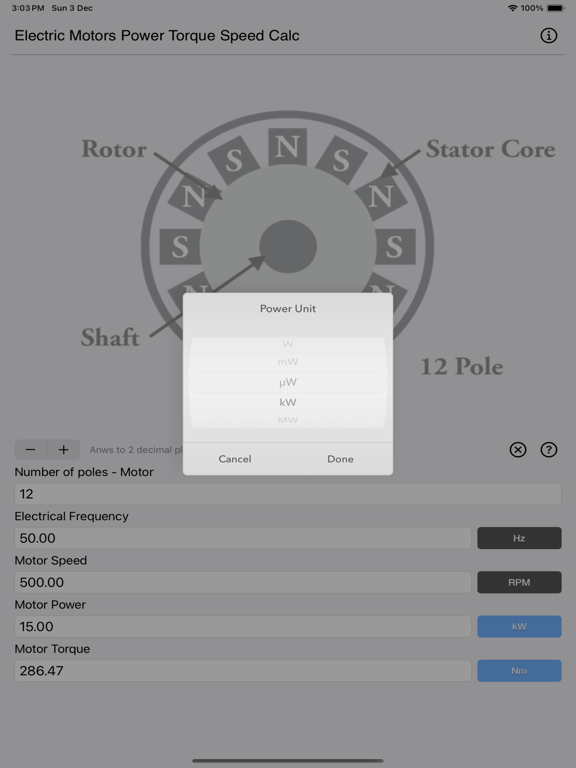
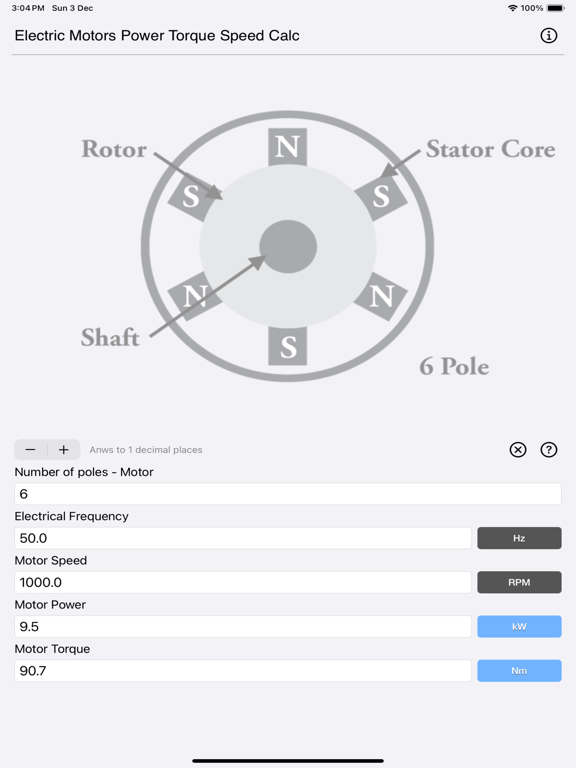
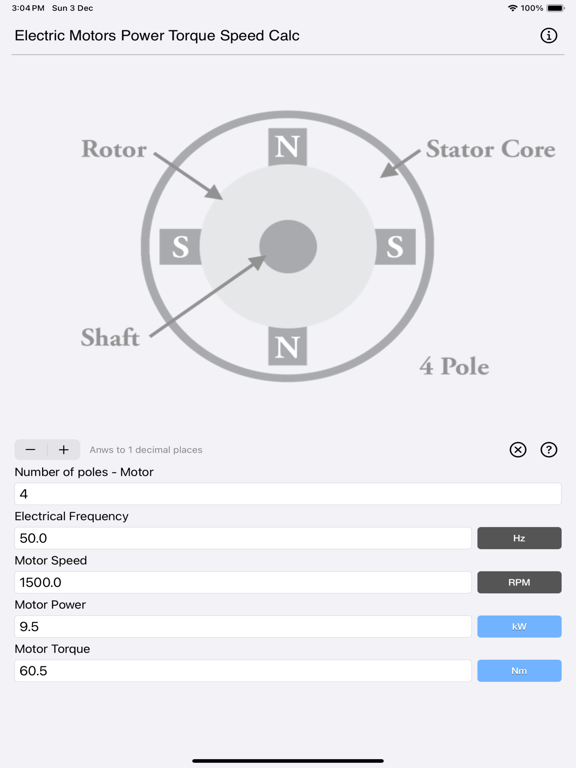
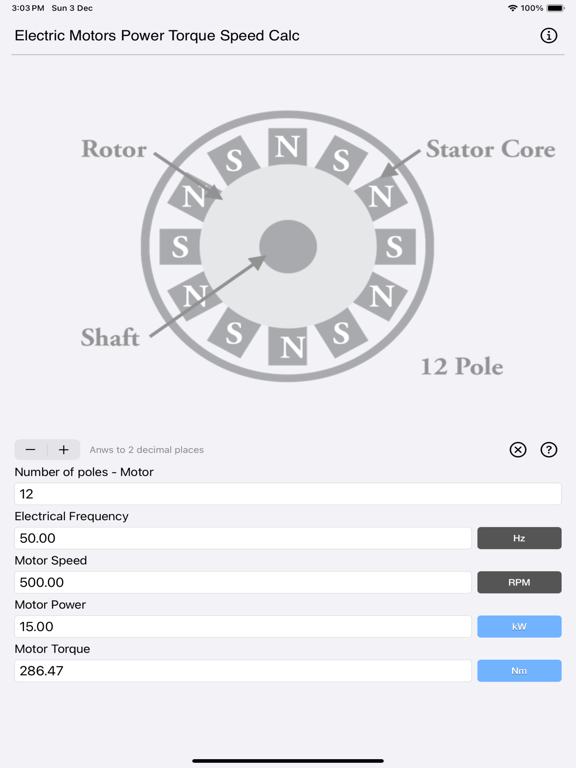
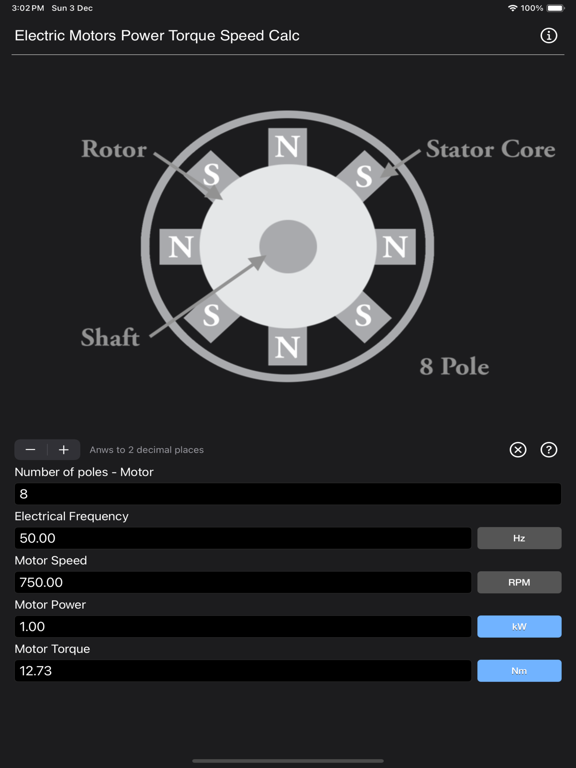
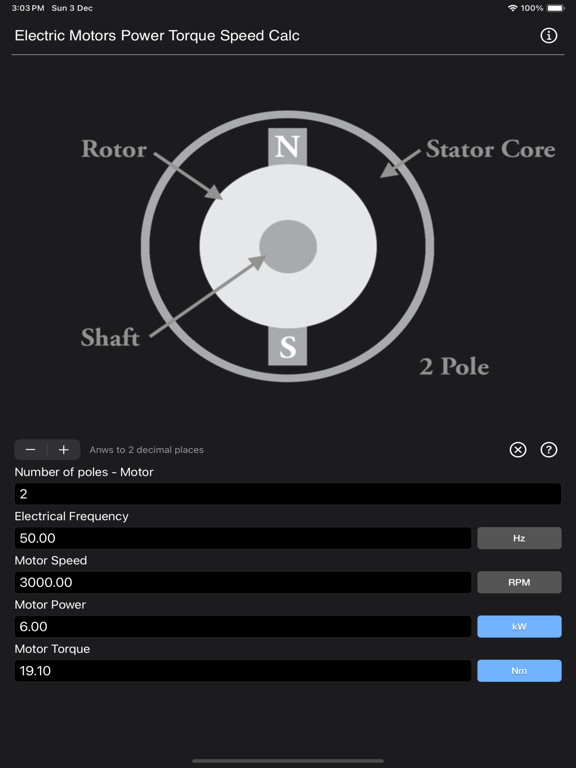
Electric Motors Power Torque Speed Calculator is a physics/math calculator designed to find electric motor power, torque, or speed quickly and easily.
Features:
- Instant calculation
- Results are copyable to other apps
- Formulas are included as references
- Supports up to 16 decimal places
- Supports various units for each input
- Lightweight app with a small size, optimized for everyday use
The speed for an electric motor in SI units can be calculated as
n = f x ( 2 / p ) x 60
The torque for an electric motor in SI units can be calculated as
T = P x 9.549 / n
Where:
T = torque (Nm)
P = power (watts)
n = revolution per minute (rpm)
f = frequency of electrical power supply (Hz, cycles/sec, 1/s)
p = number of poles
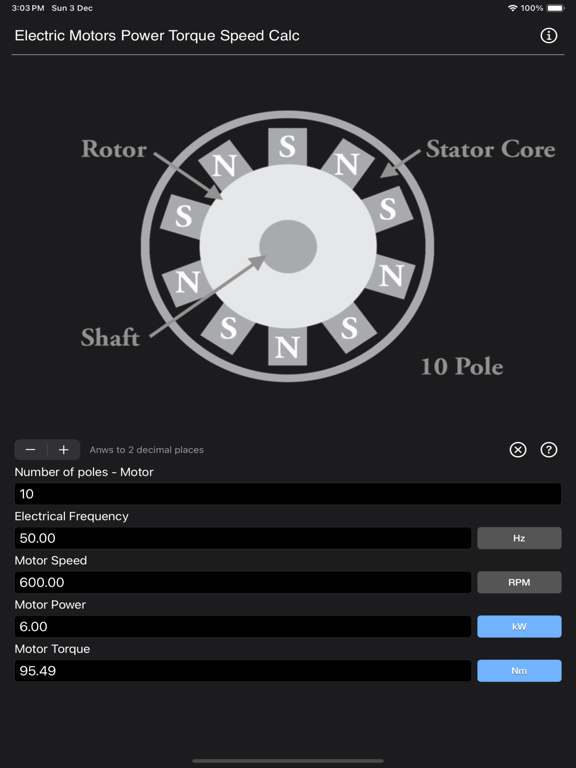
The speed for an electric motor is determined by the power supply frequency and the number of poles in the motor winding. The torque is the twisting force and is also the driving force of an electric motor. The power produced by the motor depends on the speed of the motor, which is zero at 0% speed and normally at its peak at 100% speed.
On an induction motor, the number of poles determines the speed given the frequency of the power. For example, a 2-pole motor on 60 Hz equals
RPM = 60*(2/2)*60
RPM = 3600 rpm
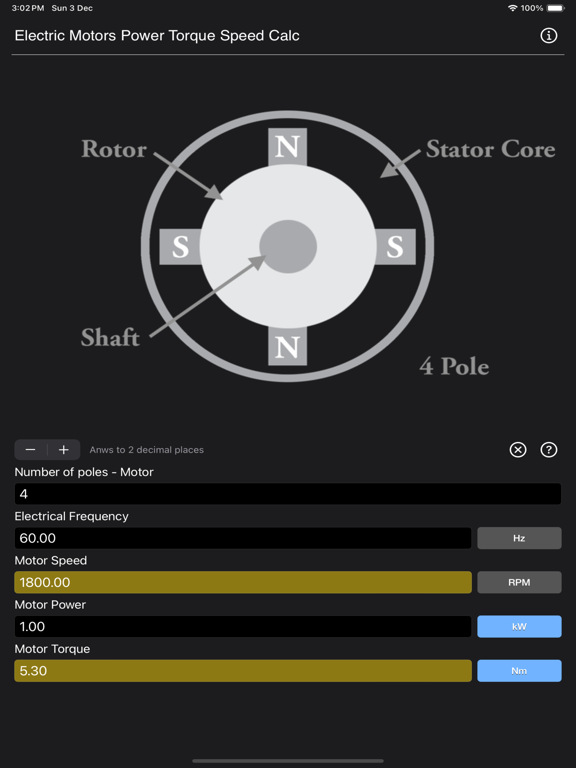
a 4 pole motor on 60 Hz equal to
RPM = 60*(2/4)*60
RPM = 1800 rpm
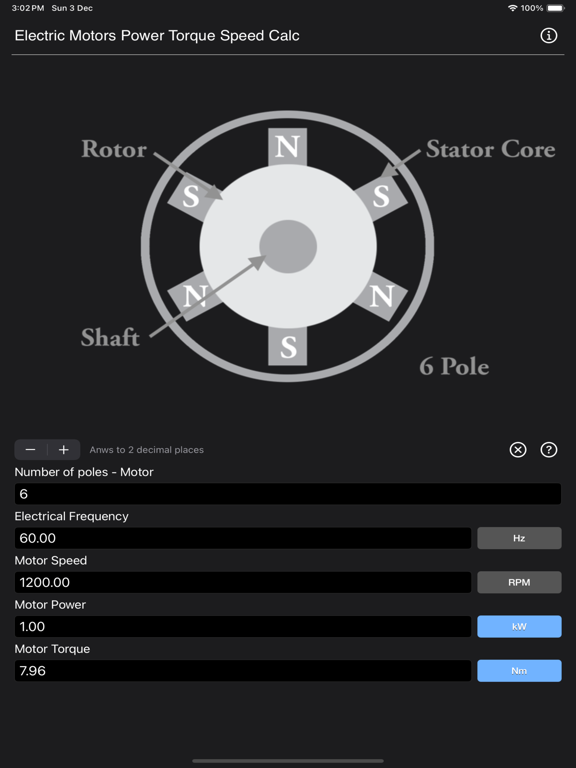
For 6 poles, 1200 rpm, and so on.
As speed decreases, the torque increases, so an 8-pole motor has 4x the torque compared to a 2-pole motor with 1/4 the 8-pole motor speed.
*60 Hz is the most common frequency in the US.
*50 Hz is the most common frequency outside the US.
Thanks for your support, and please do visit nitrio.com for more apps for your iOS devices.